A Process for Finding & Achieving Your Life’s Purpose

Mark Hamilton carries a sadness in his heart for the millions of people who go through life without purpose—stuck in stagnation traps, doing dead-end work that never engages their creative minds. But he doesn’t just identify the problem. He provides the complete process to fix it.
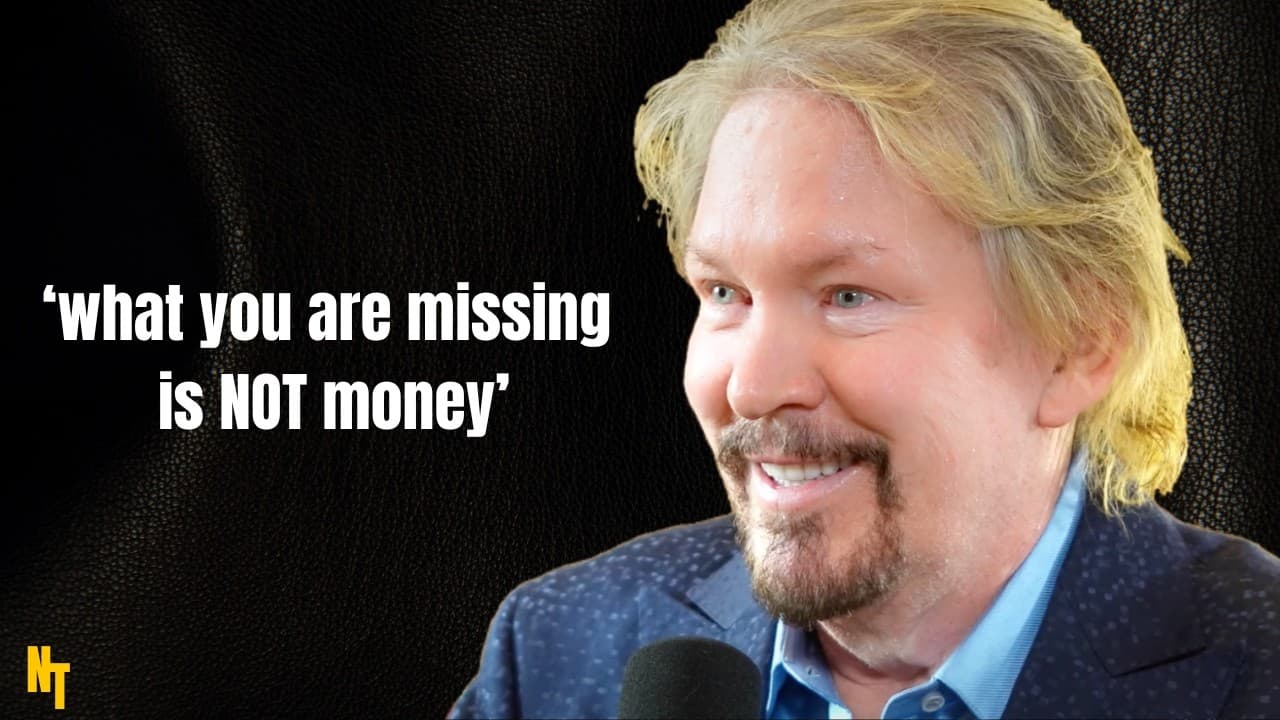
Based on Mark Hamilton · Published by Neothink Institute · 12 min read
QUICK ANSWER

Why Do Millions Feel Stuck Without Purpose?

Because jobs are designed wrong. Most companies use the Division of Labor—which was meant for manufacturing—to organize mind-intensive business work. This creates specialized, dead-end tasks that turn humans into robots and prevent them from using their creative minds. The solution is the Division of Essence, which aligns the essence of business (building value) with the essence of being human (creating value).

KEY TAKEAWAYS
  • Most jobs use Division of Labor (meant for manufacturing) on mind-intensive work—creating purposeless stagnation
  • The Division of Essence aligns business value creation with human creativity
  • Integration—not specialization—is the key to finding purpose and building wealth
  • A 5-step process transforms any stagnant job into meaningful, purpose-driven work
  • The White Collar Hoax suppresses integrated thinkers from rising

The Unnecessary Tragedy of Purposeless Living

Mark Hamilton carries a sadness in his heart for the millions of people who go through life without purpose. He’s watched it happen across generations—young graduates whose dreams fizzle within years of entering the workforce, and people his own age who’ve spent entire lifetimes feeling stuck, caught in what he calls “stagnation traps.”

The symptoms are universal: routine ruts that never change, the nagging feeling that “there’s got to be more to life than this,” disillusionment that deepens with each passing year. If you’ve ever felt this way, you’re experiencing something fixable—once you understand what’s causing it.

!
Signs of a Stagnation Trap
Stuck in routine ruts
“There must be more”
No room for creativity
Work feels meaningless
Dreams have faded
Career ceiling reached

Why Jobs Fail to Provide Purpose

The problem traces back to how companies are structured. Hamilton points to a fundamental error: the Division of Labor—perfected by Henry Ford and Milton Hershey during the Industrial Revolution—was designed for manufacturing. It was meant for labor-intensive, physical tasks on production lines.

But business itself is mind-intensive. Creating value, building wealth, solving problems—these require creativity, not repetitive motions. When you apply manufacturing logic to creative work, you turn human beings into automatons.

THE CORE PROBLEM — DIVISION OF LABOR MISAPPLIED

As businesses grow, owners delegate tasks: “Here, you do this—I don’t want to.” Over time, companies fragment into specialized departments with narrow jobs. You’re given a to-do list. You complete it. You go home. Upper management does “the thinking.” The result? Dead-end tasks that don’t integrate into building value or wealth. Your greatest asset—your creative mind—goes completely untapped.

Consider the most common jobs in America: retail clerks, fast food workers, counter service positions. If you asked a 40-year-old cashier who’s been at the same job for 15 years whether they’ve found their purpose, you know what they’d say. These jobs contribute to society—but they don’t allow people to use their minds creatively, which is the essence of being human.


Division of Labor vs. Division of Essence

Division of Labor

  • Specialized, narrow tasks
  • Dead-end responsibilities
  • No connection to value creation
  • Cookie-cutter, interchangeable roles
  • “Just do your 10 tasks”
  • Mind goes unused
  • Creates robots out of humans

Division of Essence

  • Integrated, value-building work
  • Responsibilities that grow
  • Direct connection to wealth creation
  • Unique contributions from each person
  • Creative minds engaged
  • Entrepreneurial spirit at every level
  • Natural path to rising up

The Division of Essence Solution

Hamilton recognized this problem early in his career and was determined to bring out the great creativity in every person who worked for him—even at the “lowest” levels. A custodian can be set up as a little entrepreneur, getting creative and contributing real value to the company.

The Beautiful Marriage

Essence of Business
Build Value & Wealth
+
Essence of Humans
Create Value
=
Result
Purpose & Fulfillment

The human mind is the most powerful in the known universe. We’re the only things that can create value. When you align the essence of business with the essence of humanity, you create genuine purpose. This isn’t philosophy—Hamilton has applied this in his own businesses with tremendous success.

KEY DISTINCTION

Everything Hamilton teaches comes from actual hands-on experience—nothing is theoretical speculation. Where he extrapolates beyond his direct experience, he clearly says so and never breaks the line of logic. His business books include actual handwritten notes, power thinking diagrams, and division of essence breakdowns.


Why Integration Is Everything

A Steve Jobs interview made this point clearly: when asked about “thinkers versus doers,” Jobs explained that history’s greatest innovators—like Leonardo da Vinci—were both. Da Vinci wasn’t just an expert in one thing; he was an integrator of many things. He mixed his own pigments, calibrated his own tools, thought about the future while making do with what he had today.

🍬

The Atom of Business: A Candy Cart Vendor

Hamilton uses the example of a one-man candy cart vendor in New York City. Even if he makes the greatest candies in the world, he won’t succeed without integrating everything else. Milton Hershey started exactly this way—pushing a candy cart on the streets—and rose to build a chocolate empire and an entire town in Pennsylvania. He was a master integrator.

Marketing
Positioning
Cleanliness
Accounting
Inventory
Timing
Location
Presentation

When companies divide work by the Division of Labor, there’s no integration. It’s just “here are your set responsibilities.” Specialization is the opposite of integration—and that’s why most people stay stuck at the bottom.


How to Find Your Purpose

The 5-Step Process

1
Activate Project Curiosity

Stop approaching your job with “let me get through this and go home.” Instead, go in wide-eyed with childlike curiosity. Ask questions about everything: Who started this company? How does that department work? Build friendships and show genuine interest in succeeding.

2
Expand Your Integration Capacity

As you explore with curiosity, you break out of tunnel vision. You start seeing the whole company for the first time. This expands your mind and allows you to start integrating—connecting different pieces together. Higher-level thinking emerges naturally.

3
Identify Areas of Purpose

Look around your company and identify where money is actually made and values are built. Customer acquisition? Marketing? Efficiency improvements? Point to what you want. If you’re stuck in a dead-end department, you’ll never rise because your work doesn’t integrate into wealth creation.

4
Absorb Nitty-Gritty Details

Start learning the responsibilities and details needed for your chosen area. People are more than happy to let go of tedious nitty-gritty details when someone ambitious offers to handle them. Take over these details one by one, pulling together what’s currently split across departments.

5
Build Mentally Integrating Responsibilities

Pull together split responsibilities under your integrated understanding. Because you understand all the pieces, you can move swifter with more integrated grasp. You’ll naturally become superior to specialists working in silos—and you will rise.

KEY CONCEPT — INTEGRATING VS. SPLIT RESPONSIBILITIES

Split responsibilities are scattered across departments—someone in this department has a piece, someone over there has another piece. Everything has to be coordinated, and the company moves slowly. Mentally integrating responsibilities pulls those pieces together under one mind. You learn data tracking, filming, ad placement—all the components of your area of purpose—and can execute complete projects with superior speed and insight.


The White Collar Hoax: Why This Gets Suppressed

Beyond the structural problem of misapplied Division of Labor, there’s something more sinister at play. Hamilton calls it the “White Collar Hoax.”

!
Warning

The White Collar Hoax

Smart individuals—good at workplace politics—ride businesses built by creative founders. They work their way up without creating real value. Once at the top, they suppress integrated thinkers who might outperform them, setting up departmental structures that prevent others from rising.

True Leader: William Durant

The founder of General Motors encouraged Charles Nash to rise up as an integrated thinker. Original founders understand that growing talent grows the company.

White Collar Hoax: Henry Ford II

Felt threatened by Lee Iacocca’s integrated thinking—so he got rid of him. Iacocca went to Chrysler and became a legendary force behind its rise.


What Purpose Actually Brings

When you have a job where you’re building value and wealth—using your creativity, doing something meaningful in harmony with your essence—you experience genuine purpose. You’re not stuck in a stagnant rut. You’re using your mind. You’re generating meaning.

What Purpose Brings to Your Life

Fulfillment
🏆
Success
😊
Happiness
💪
Self-Esteem
🎯
Meaning
🔥
Momentum

The record numbers of therapists and suicides today trace back to this lack of purpose. People aren’t doing what they’re made for. They’re not using their minds, not living in harmony with their essence as conscious human beings—which is creation. All of that changes once you find purpose.

MARK HAMILTON

“I carry a sadness in my heart for the unnecessary millions and millions of people who go through life without purpose. I carry a sadness in my heart, and I’m out to fix that.”

COMMON QUESTIONS

Frequently Asked Questions

Why do so many people feel stuck without purpose in life?

Most jobs are structured using the Division of Labor, which breaks work into specialized, repetitive tasks. While effective for manufacturing, this approach prevents people from using their creative minds to build value—the essence of being human. When you can’t create, you feel purposeless.

What is the Division of Essence?

The Division of Essence organizes work around value creation (the essence of business) and creativity (the essence of humans). Unlike Division of Labor which creates specialized robots, Division of Essence transforms every role into an opportunity to build wealth and create value.

What is Project Curiosity?

Project Curiosity means approaching your workplace with childlike wonder—asking questions about every department, learning how things work, building genuine relationships. This expands your integration capacity and helps you see the whole company rather than just your narrow role.

What are Areas of Purpose in a business?

Areas of Purpose are the money-making, value-building parts of a business—customer acquisition, marketing, product development, efficiency improvements. If you’re not working in an area that builds value and wealth, your job is essentially disposable. Moving into these areas gives your work meaning.

What is the White Collar Hoax?

The White Collar Hoax describes smart individuals who ride businesses built by creative founders, using workplace politics to rise without creating real value. They suppress integrated thinkers who might outperform them, setting up structures that prevent others from rising.

Can I find purpose without leaving my current job?

Yes. Using Project Curiosity and the process of absorbing mentally integrating responsibilities, you can transform even stagnant positions into areas of purpose. By moving toward money-making areas and pulling together split responsibilities, you can rise within your company while gaining skills for future opportunities.

Why is integration the key to business success?

Even the greatest specialist fails without integration. Milton Hershey succeeded by integrating all aspects of his candy business. Steve Jobs emphasized that history’s greatest innovators were integrators who both thought and did. Specialization is the opposite of integration—it keeps you stuck.

CONTINUE THE JOURNEY

Ready to Find Your Purpose?

Mark Hamilton has spent decades developing the frameworks that transform stagnant work into meaningful value creation. Whether you want to rise within your company or eventually break out on your own, the path starts with understanding the Division of Essence.

Escape the stagnation trap. Discover your purpose.